
Common Larch Tree Mistakes: 10 Problems to Avoid
Larch has a reputation for being tough. It grows quickly, shrugs off hard frost, and looks magnificent on a hillside in early spring when its soft green needles emerge on bare branches. That reputation is exactly why so many young larches fail. Gardeners and smallholders plant them as if nothing could go wrong, then wonder why a five-year-old tree is thin, yellow and leaning.
Most larch problems start in the first year or two, long before the tree looks unwell. Get the planting right and you will spend far less time worrying later.
Mistake One: Planting Where Water Sits
This is the single biggest killer of young larch. Larch likes a cool, moist soil, but its roots need air. Ground that stays wet through winter will slowly suffocate them, and weakened roots are wide open to root-rotting organisms. The tree may look fine in spring and then collapse in a dry spell, because a damaged root system cannot support the canopy.
Test before you dig. In winter or early spring, dig a hole about 30cm deep, fill it with water and leave it overnight. If it is still full the next morning, that spot is wrong for larch. Either choose higher ground, or plant on a raised mound of soil mixed with grit and garden compost, keeping the mound wide enough that roots are not confined to a bucket-shaped pocket of improved soil.
Heavy clay needs particular care. Digging a generous planting hole and filling it with rich compost in the middle of a clay field creates a sump. Water collects in the soft compost and stays there. Improve a broad area instead, or keep the tree above the surrounding ground level.
Mistake Two: Planting Too Deeply
A larch planted 10cm too low will often survive its first summer and then decline for years. Burying the root collar encourages bark rot at the base and roots that grow upwards around the trunk instead of outwards. The tree also tends to sit in a hollow that fills with water and mulch.
The routine that works:
- Dig a hole wider than it is deep, roughly three times the width of the root ball.
- Set the tree so the root collar — the point where trunk meets roots — sits level with the finished soil surface, not below it.
- Tease out any roots circling the root ball, then spread them outwards.
- Backfill in stages, firming gently with your heel as you go. Do not stamp hard.
- Water thoroughly, then check the following week. Fresh soil settles, and the tree can sink with it.
- Mulch in a ring, leaving a clear gap around the trunk.
Bare-root larch should go in between late autumn and early spring, while the tree is dormant and the soil is neither frozen nor waterlogged. Pot-grown trees can be planted at most times if you water them properly, but autumn planting still gives the best start.
Mistake Three: Spacing and Site Room
Larch is fast. A healthy young tree can add well over half a metre in a good year, and it will not stop politely at the boundary fence. People plant a shelterbelt at one-metre intervals, or set a specimen a couple of metres from a patio, and then face a difficult choice a decade later.
- Specimen trees: work out the mature height and spread, then leave generous clearance from buildings, drains, overhead cables and boundaries.
- Shelterbelts: around 2–3m between trees within a row, with rows 3–4m apart, gives room to develop without becoming a thicket.
- Hedging: larch is a poor choice for a tight formal hedge. It drops its needles in winter, and cutting back into bare old wood usually produces no regrowth.
- Drainage: keep larch well clear of soakaways, septic tanks, field drains and retaining walls.
Also think about what is underneath. Larch casts light shade, so grass and wildflowers grow right up to the trunk, which brings its own problems.
Mistake Four: Panicking When the Needles Turn Gold
Every autumn, someone digs up a perfectly healthy larch because it is going yellow and dropping its needles. Larch is a deciduous conifer. That colour change, followed by a bare winter silhouette, is normal behaviour, not disease.
The mistake is not just the panic — it is the missed opportunity. Autumn is a good time to look closely at the tree while it is still carrying needles, checking for patchy browning, bare patches or resin bleeding that would point to something more serious.
Mistake Five: Missing the Early Signs of Disease
Larch troubles rarely appear overnight. Sparse foliage, needles browning months early, thinning crowns, dead shoots, cankers or streaks of resin on the trunk all deserve attention straight away. By the time a larch looks obviously sick, it has usually been struggling for a season or two.
Some larch diseases in the UK are notifiable, and suspected cases should be reported to the forestry authority for your part of the country rather than diagnosed by guesswork. Do not move cut wood, logs or plants off the site, and avoid buying cheap stock of unknown origin. Buy from a reputable nursery, keep records of what you planted and when, and photograph anything unusual so you can compare it year to year.
If you are managing larch at any scale, and especially if you sell timber, it is worth taking advice from a qualified arboriculturist or forestry adviser before felling or replanting.
Mistake Six: Ignoring Drought Stress in the First Few Summers
A newly planted larch needs help for two or three growing seasons. Dry spells in May and June do the most damage, because that is when the tree is extending new growth and cannot afford to stall.
Water deeply and less often. One slow, thorough soak twice a week in dry weather beats a light sprinkle every evening, because it pushes moisture down to where roots are working. Check the soil about 10cm down before deciding; if it is damp, leave the canister alone. A mulch of bark or compost, kept clear of the trunk, will hold that moisture far longer than bare ground. Yellowing, wilting tips, and needles dropping early in late summer are all signs the tree has gone short.
Mistake Seven: Forgetting Weeds, Guards and Bark
Competition is quiet but relentless. Grass and weeds strip water and nutrients from a young tree's rooting zone, so keep a clear circle at least a metre across for the first three years. Fit a rabbit guard where deer, rabbits or squirrels are about, check ties each spring and loosen them as the trunk thickens. Finally, keep strimmers and mowers well away — a single graze through the bark at the base can girdle a young larch and kill it slowly over the following year.
Getting It Right: A Simple Routine
Check drainage before you buy the tree, plant it so the root collar stays visible, give it room to reach its mature size, and water it properly for three summers. Then walk round it once a month through the growing season. Ten minutes with a pair of eyes catches most problems while they are still fixable — a blocked guard, a dry patch, a patch of browning needles, a tie cutting into bark.
Larch rewards that modest attention with decades of graceful growth. It rarely needs feeding, staking or fuss. It simply needs to be planted in the right place, at the right depth, and watched closely enough that the first warning sign is not also the last.
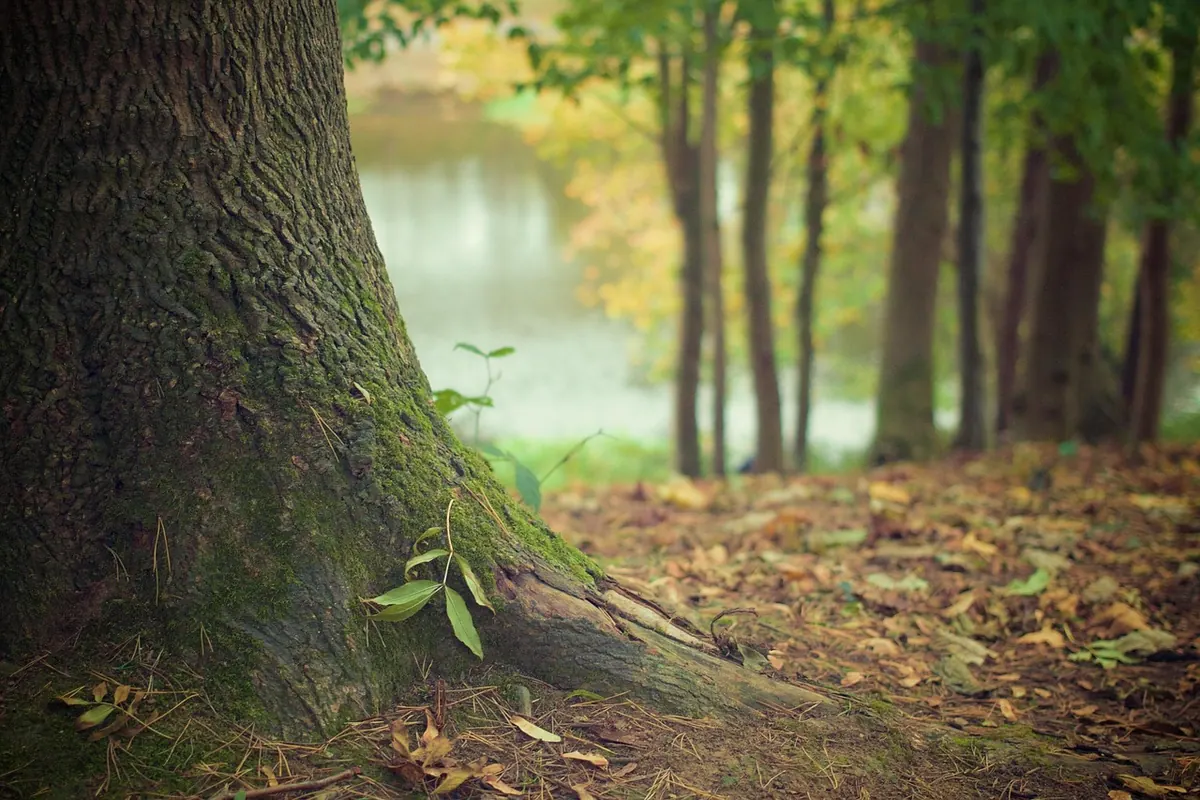
Photo: DaveMeier / Pixabay