

Pruning Larch Trees: When, How and What to Avoid
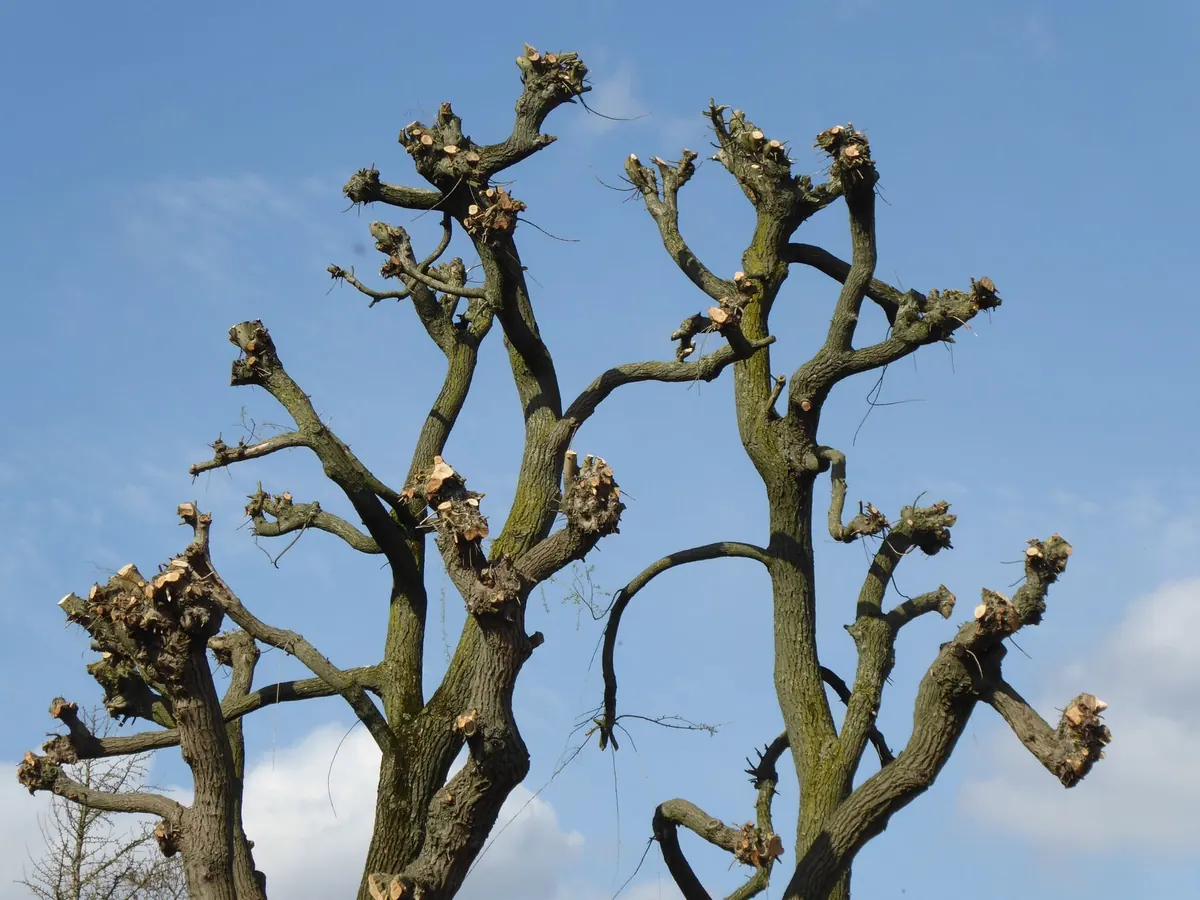
Larch trees are generous. They give you fresh green needles in spring, golden colour in autumn, and a clean bare outline in winter. That seasonal rhythm is also the key to pruning them well. Treat a larch like a pine and you may cut away next year's growth. Treat it like a hedge and you will ruin its shape. The good news is that larch is forgiving if you work with its growth cycle rather than against it. This guide covers timing, shaping young trees, removing deadwood, and the errors that do lasting harm.
Why larch needs a different approach
Larch is a conifer, but it is not evergreen. It drops its needles in autumn and grows a new set each spring. That makes it more responsive to pruning than many conifers, but it also means the tree's energy is tied to a single flush of growth. Most larches produce one main flush in spring, with some extension growth through early summer. If you cut back hard into old, bare wood, you cannot rely on dormant buds breaking reliably along the branch. New shoots usually appear at the tips or on younger wood. So the aim is to guide growth, not to force it. Keep cuts small, make them while the tree is young, and leave the older framework alone.
The best time to prune larch
Timing is the difference between a tidy cut and a weakened tree. In the UK, the main window is late winter to early spring, just before the new needles push out. February to mid-March suits most gardens, though mild coastal areas may start earlier and cold northern sites later. At this point the tree is still dormant, the sap is not yet moving strongly, and the wounds have the whole growing season to seal over. You can also prune in late summer, after the current season's growth has hardened, if you need to remove a stray branch or tidy a young tree. Avoid the main flush of growth in late spring and early summer, when the tree is investing energy in new needles. Avoid pruning in autumn, especially in wet, mild spells, because cuts heal slowly and fungal spores are about. Dead, damaged or diseased branches are the exception: remove those whenever you spot them, for safety and tree health.
- Late winter to early spring: best for structural and formative pruning.
- Late summer: acceptable for light tidying and removing awkward shoots.
- Any time: dead, broken or diseased branches, if it is safe to reach them.
- Avoid: late spring to midsummer for heavy pruning; autumn for open wounds.
Shaping a young larch
Young larches are best trained early. A tree that is shaped in its first ten to fifteen years will need far less corrective work later. Start by studying the tree from a few metres away. Look for a single, strong leading shoot that runs straight up the centre. If two shoots are competing, keep the stronger, better-placed one and remove the other cleanly. This prevents a fork that can split in wind or snow.
Build a clear framework
Remove side branches that are crossing, rubbing or growing back into the centre of the tree. Keep the branches that are evenly spaced around the trunk and angled slightly upwards. On a young larch, you can shorten overly long side branches by about a third, cutting back to a side shoot or outward-facing bud. Do not cut them back to the trunk in one go unless you are removing them completely. For lower branches, remove only the lowest whorl or two if you want a clear stem. Take your time: removing too many branches at once reduces the tree's ability to feed itself.
Keep the natural shape
Larch has a graceful, conical habit. It is not a hedge and should not be clipped into a tight ball or box. If you are growing a larch as a specimen tree, prune only to remove problems and to thin crowded growth. If you are training a loose hedge or windbreak, shear lightly in late winter and again in late summer, but never cut into the old, bare centre. Always leave some green growth on the branch.
Removing deadwood safely
Deadwood removal is straightforward and can be done at any time of year. Use sharp, clean bypass secateurs or a pruning saw that suits the branch size. For anything thicker than your wrist, or anything above head height, call a qualified tree surgeon. The correct cut is the important part. Do not cut flush with the trunk. Find the branch collar, the slight swelling where the branch meets the trunk, and cut just outside it. On larger branches, use the three-cut method: first make an undercut a little way out from the trunk, then cut from above to remove the weight, and finally cut the remaining stub back to the branch collar. This stops the bark tearing as the branch falls. If a branch is diseased, clean your tools with a garden disinfectant afterwards to avoid spreading problems to other trees.
Common pruning mistakes to avoid
Most larch damage comes from a handful of errors. Avoid these and your tree will thank you.
- Topping the tree. Cutting the leader off a larch ruins its shape and encourages a weak, bushy crown. If a larch is too tall for its spot, it is usually the wrong tree for that spot.
- Cutting into old, bare wood. Larch is more forgiving than many conifers, but it is still risky to cut back hard into thick, leafless branches. New growth is most reliable on younger wood.
- Pruning in wet weather. Damp conditions increase the risk of fungal infection. Choose a dry day, and avoid working when rain is forecast for the next day or two.
- Leaving stubs. A stub dies back and can let disease into the trunk. Cut cleanly to the branch collar or remove the branch entirely.
- Over-pruning in one session. Remove no more than about a quarter of the live growth at a time. The tree needs needles to make food.
Photo: Timothy Huliselan / Pexels